

The graduate market is going through a rough patch. International student pipelines are under pressure, changes to graduate-level federal financial aid are creating market confusion, and domestic graduate enrollment rates are declining.
But the graduate market is not a monolith. Amid these short-term policy shocks and longer-term demand pressures, one segment stands out: the graduate certificate.
Understanding Overall Graduate Enrollment Trends
Based on the latest data available, overall graduate enrollment grew by 4% between fall 2020 and fall 2025. At face value, this appears to be a success story. Dig deeper, however, and cracks begin to appear.
First, graduate enrollment stumbled in fall 2025. Enrollment declined 0.3% from fall 2024 to fall 2025 after growing 3% the previous year.
Second, the slowdown extends beyond a single year. Graduate enrollment grew just 4% between fall 2020 and fall 2025 — nearly 50% slower than the prior six-year period (7% growth between fall 2015 and fall 2020).
Figure 1 compares graduate enrollment performance over these two six-year windows.
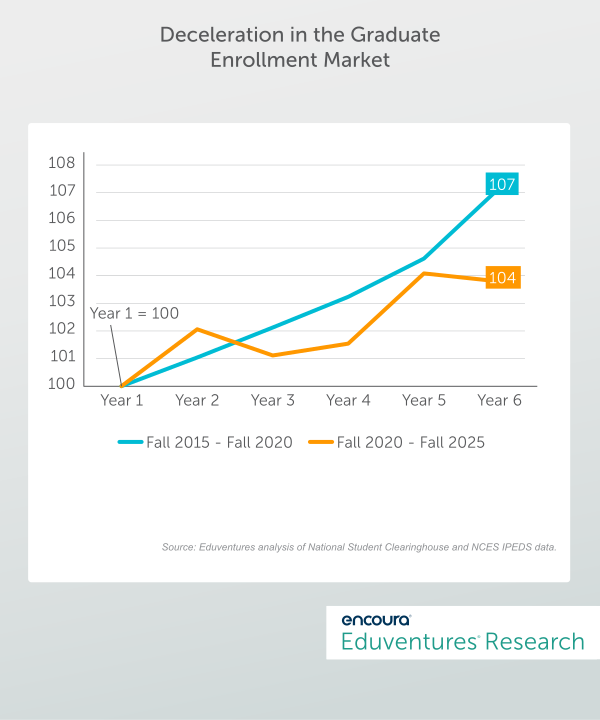
Figure 1.
While graduate enrollment grew every year between fall 2015 and fall 2020, the 2020–2025 period included two years of enrollment decline. What do these downturns have in common? Disruptions to international student enrollment — first in the aftermath of pandemic-era shutdowns and now amid visa policy changes and a more restrictive federal policy environment. Indeed, graduate-level international enrollment in the U.S. fell 6% in fall 2025 amid new turmoil.
The elimination of Grad PLUS loans on July 1, 2026 — which previously allowed graduate students to borrow up to the full cost of attendance — stands to send another shock wave through the graduate market as students and institutions adapt to new (and still contested) borrowing limits. An expectation for more decline in fall 2026 seems like a safe bet.
Searching for Outperformance
Analyzing the graduate market by credential segment, however, reveals uneven enrollment performance. Figure 2 plots the four graduate market segments based on long- and short-term enrollment growth. The size of the circle correlates with enrollment scale.
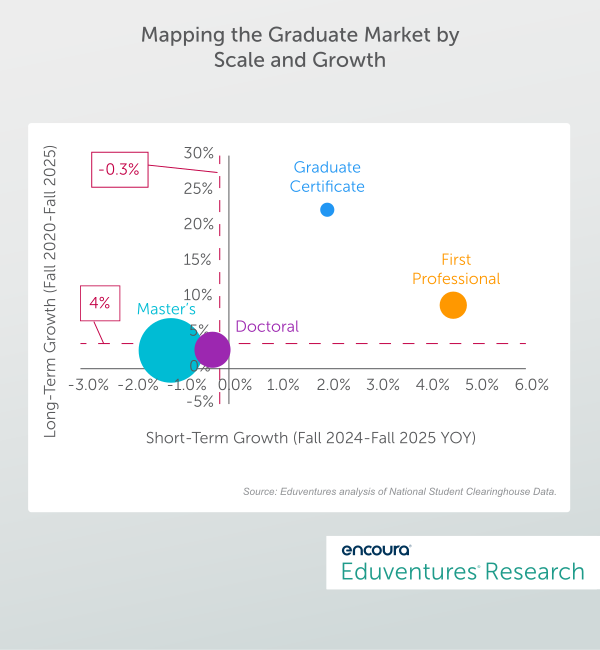
Figure 2.
Two clear outperformers emerge in Figure 2: both the graduate certificate and first-professional market segments saw long-term enrollment growth (22% and 9% respectively) and short-term enrollment growth (2% and 4.5%, respectively).
Demand for programs in the first-professional degree segment can be characterized as more inelastic. A student cannot become a physician, attorney, pharmacist, or dentist, for example, without completing an accredited first professional degree. When demand exists for those professions, students have no alternative pathway. That makes the segment somewhat immune from broader market pressures.
The graduate certificate segment, on the other hand, benefits from a few structural features that set it apart from the rest of the graduate market — potentially insulating it from both the short-term policy shocks and long-term headwinds facing graduate program portfolios.
A New Moment for Graduate Certificates?
So, what factors could set up graduate certificates for renewed success in the years ahead?
- Domestic student focus. Certificate seekers skew domestic. They are more often working adults looking for targeted upskilling on an accelerated timeline — not the international student population absorbing the brunt of visa policy changes. For example, 21% of all master’s degrees conferred from U.S. institutions went to international students in 2024, while just 10% did for graduate certificates.
- Less financial aid exposure. Many graduate certificates fall below the new lower graduate borrowing limits to begin with, and a meaningful share of graduate certificate programs aren't eligible for federal financial aid at all. That makes Grad PLUS elimination largely a non-issue for this segment, even as it reshapes decision-making for costlier master's programs.
- An easier value story. As public skepticism about the ROI of college climbs, a shorter, targeted credential with a direct labor market connection is simply a more defensible sell than a master's program asking for a much bigger financial and time commitment.
- The AI disruption. The World Economic Forum’s 2025 Future of Jobs Report found that “workers can expect that two-fifths (39%) of their existing skill sets will be transformed or become outdated over the 2025-2030 period.” With AI continuing to advance and shifting skill demand in the labor market, the shelf life of skills will likely continue to shrink. The graduate certificate offers a more targeted opportunity for skill development compared to the master’s degree.
Taken together, the graduate market's two growth stories are clear: one segment where the credential is required for entry into the profession (first-professional), and another offering a shorter, lower-cost, more focused pathway (graduate certificates).
Renewed momentum in this space, however, is not a sure thing. As market competition has intensified with ever more programs, program productivity (completions per program) has slipped. Additionally, if graduate certificate programs benefit only from cannibalized master’s interest, rather than net new growth, graduate portfolios risk being dragged down overall.
The Bottom Line
We are well past the “if you build it, they will come” era of the graduate certificate market. Offerings for the future must be intentionally designed, market aligned, and much more than “merely available.”
That’s why our latest Insights Report, the Eduventures Graduate Certificate Market Update, details the latest market characteristics and prospective student preferences academic and enrollment leaders need to know to navigate the market ahead. Modality, productivity, and field of study trends are all covered.
For institutions willing to design deliberately, this segment may be one of the clearest paths to growth that the graduate market has to offer right now.

Stay Competitive in the Adult Learner Market
The Eduventures Adult Prospect Research examines the current state of the adult prospect landscape and evaluates adult learner perceptions, expectations, and motivations for postsecondary education. Understanding these trends can help institutions refine your adult, online, and graduate program strategies to strengthen your competitive position in the market.
