


When you say “Parents and Family,” who do you really mean? For most institutions, the answer centers on parents and guardians — and with good reason. The majority of prospective students say that parents and guardians play an important role in their college search.
But the American family looks different than it did a generation ago — and so does the network of people influencing students as they explore their college options. The Eduventures Prospective Parent Research™ draws attention to a broader view of family.
The Role of Parents and Guardians
The “and Family” part of “Parents and Family” really shines around orientation season. You’ll see it on welcome banners, session titles, and program agendas. It acknowledges that students aren’t arriving at college alone — alongside incoming students is a network of people who helped them get there.
In practice, however, “and Family” often translates to a far narrower audience: parents and guardians (for the purpose of the rest of this post “parents” is inclusive of parents and guardians). And there is no denying the impact parents have on students’ college search and choice. Figure 1 shows the ways students are pointing to their parents throughout the enrollment journey.
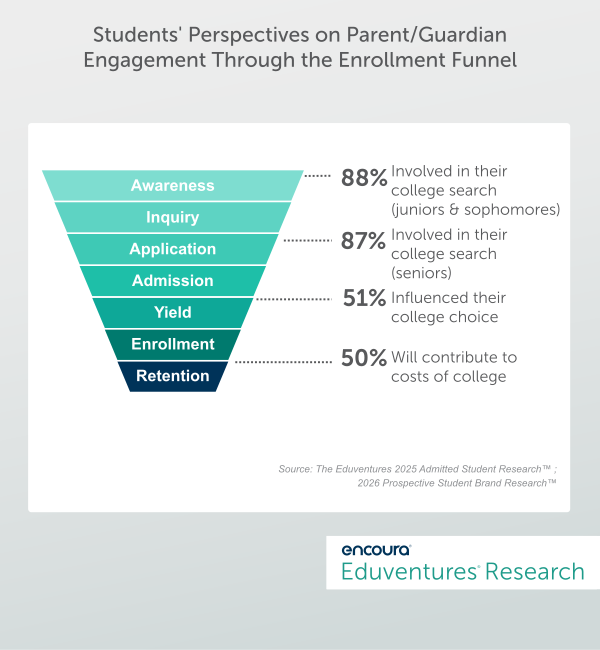
Figure 1.
Throughout the funnel, students credit parents with supporting college exploration, helping make decisions, and covering college costs. Furthermore, just over half of admitted students share that their parents were influential in their college choice — above peers, current students, and campus staff.
And the feelings are mutual. About 98% of parents of college-bound students say they are involved somehow with their child’s college search — including the final decision. In the Eduventures Prospective Parent Survey, 55% of parents felt their involvement in their child’s search was balanced between them and their child, and 21% said they played a leading role with more say than their child.
The Other Family Members
While parents clearly have pull, what about the rest of the “and Family” members? The Eduventures Prospective Parent Research also examined the other individuals that parents perceive as influential in their child’s college decision making. We found that 47% of parents identified other familial figures as part of the college decision.
Figure 2 shows the other family members that parents identified as influencers.
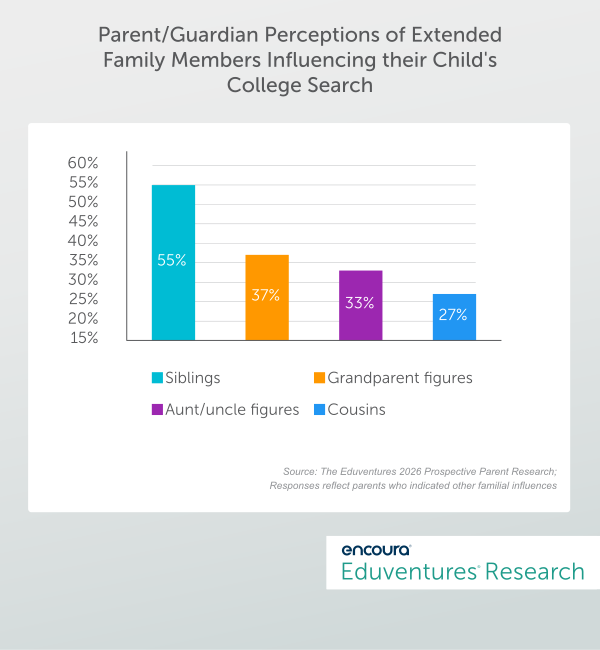
Figure 2.
According to parents who said extended family influenced their child’s college search, grandparents, siblings, cousins, aunts, and uncles all had impact — emphasizing the broader “and Family” potential. In Figure 2, however, a clear front-runner emerges: Siblings make up over half of the extended family influence.
Some campuses have tapped into this potential through focused sibling days or sibling-specific programming at family weekend events. The question for these campuses is, “How are enrollment and recruitment offices engaged with or connected to these initiatives?”
As enrollment teams face changing demographics, they can also count on shifting perspectives of the definition of family. With multigenerational households on the rise, family structures that draw upon guidance from extended family networks are more expected.
Family networks won’t always map neatly into a parent portal or family programming that, in reality, is primarily designed for parents and guardians. Waiting until Family Weekend means missing conversations that are already happening and that are shaping whether students will choose your institution.
How To Connect to More Family Members
More than a courtesy, how you approach "and Family" is a signal about who you consider to be a part of a student's college decision. Expanding that definition, and building intentional strategies to match, is one of the more accessible opportunities for enrollment teams.
Here are a few places to start:
- Audit your “and Family” access. Review your current parent and family communications and outreach. Does your language assume a nuclear family structure? Does your outreach accommodate other supporters who have a vested stake in the student’s future?
- Tap into campus partners. Across campus, Parents and Family events for current students are opportunities for enrollment teams to engage younger family members. Partnerships and collaboration with campus units engaging current students’ parents and families are mutually beneficial — families of enrolled students have the opportunity to engage and support their student, while enrollment teams can engage the potential next generation and extended family supporters.
- Don’t wait until orientation. Parents have college conversations with their children before applying, and we can presume that extends to the whole family. Engaging the full family network can happen well before orientation and doesn't have to start big. Small changes like clarifying your guest policy for campus tours or creating a sibling kit for current students to bring home can open doors to a broader audience.
The Bottom Line
As students move through the enrollment funnel, so does their family network. Institutions that invest in understanding and engaging that network gain a meaningful advantage, especially as the traditional funnel grows more competitive and less predictable.

FREE RESOURCE
Engaging Today’s Prospective Parents & Guardians
Many enrollment teams focus on the shifting demographics and preferences of today’s college-bound students, far fewer colleges are paying attention to their families’ motivations and behaviors. Access this Action Plan to learn the unique characteristics of today’s parents/guardians and empower your team to successfully engage them to support enrollment.

Have questions? Want to learn more?
Let's chat! Our team is happy to answer questions and talk about which solutions are a match for your institution as we get to know your unique needs.