

A recent Eduventures conference presentation on parent and guardian engagement drew a packed room — a sign of growing need. Polled attendees rated their own institution's parent engagement "basic” (46%) or “sparse” (28%).
Yet, parents remain critical partners in college search. Some can lean on their own experience navigating it. But what about those parents who do not have that experience? According to the U.S. Census Bureau, nearly a quarter of U.S. children live in a household where the guardians never enrolled in college.
How do these parents and guardians guide major decisions when this is new territory for them too? The Eduventures Prospective Parent Research™ offers insight into this overlooked audience.
Many institutions focus on recruiting first-generation students with much less consideration given to their parents and guardians (who we will reference as “parents” for the purposes of this post). At many institutions, parent outreach is only in early stages overall and not tailored to specific parent segments.
But first-generation parents may need more support and information than parents who previously attended college as they help their children through this major step toward adulthood. For some families, that information gap may be enough to keep the right fit off the table entirely.
The Eduventures Prospective Parent Research uncovers two insights that may help institutions better engage the whole first-generation family.
Lower Engagement May Reflect Outreach, Awareness Gaps
First-generation parents are less active in college search activities than college-educated parents. The gap holds across the board, from high-effort activities like campus visits to low-effort ones like browsing websites.
On its own, that pattern could be read as disengagement. But communication is a two-way street, and outreach tells a different story.
First-generation parents are less likely to have received outreach from a college in the first place (44% vs. 61% of non-first-gen parents). When they do receive it, their engagement rises across nearly every search activity except website visits and social media. Figure 1 shows that first-generation parents who received outreach report greater engagement than parents who didn’t, regardless of their own educational background.
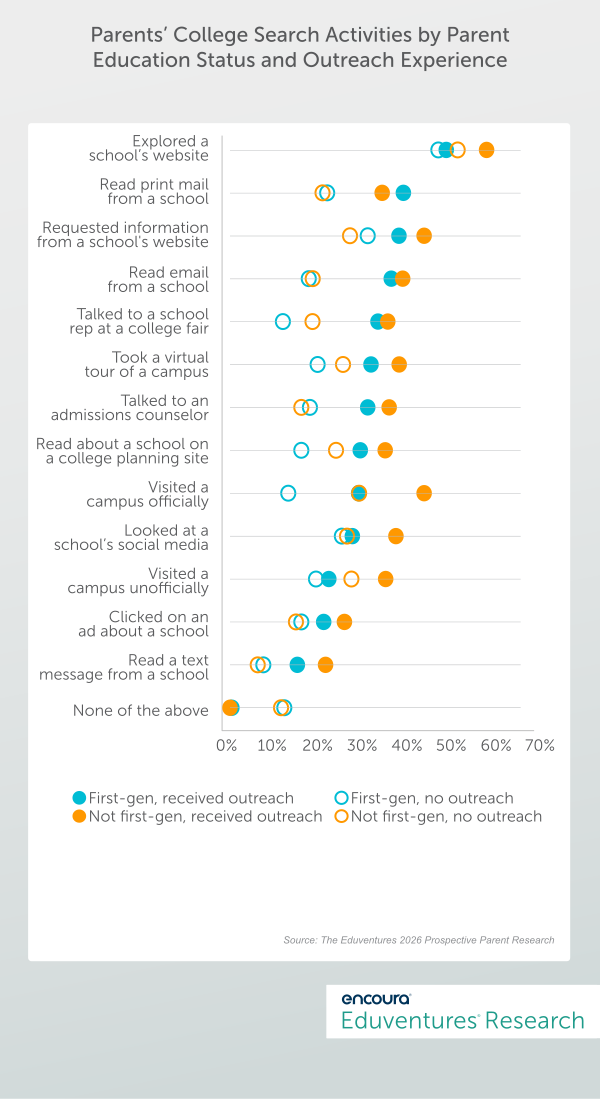
Figure 1.
First-generation parents who receive outreach still trail their non-first-generation counterparts, but the difference outreach makes is substantial. Print mail sees the strongest response: first-generation parents (or their children) who received it are among the most likely to have read it. While many institutions are shifting early-funnel communication from print to digital, Figure 1 shows that some investment in print can pay off for first-generation families.
But budget-conscious recruitment offices can take solace in the fact that recruitment emails are similarly effective — if they have email addresses for parents. Capturing parent contact information early in the funnel is a well-known challenge for recruiters.
In contrast, the widest gap shows up in campus visits — a pattern that looks less like disinterest and more like a lack of resources, time, or ability to travel. And these under-resourced parents — like many others — often don’t share their contact information until late in the recruitment process. This makes it challenging for institutions to build solid recruitment relationships with these families early on.
So how can institutions build stronger relationships with prospective first-generation families? Reaching first-generation parents is only part of the challenge. Institutions also need to understand what builds credibility with them. Here, community may be particularly important.
Community Reputation Matters More Than Career Reputation
Regardless of their own educational status, most parents show a strong preference for colleges based on cost, but reputation runs a close second. This is true for college-educated parents as well. What differs is how first-generation parents define reputation.
Figure 2 shows which aspects of a college’s reputation matter most to parents, broken out by the parents’ education status.
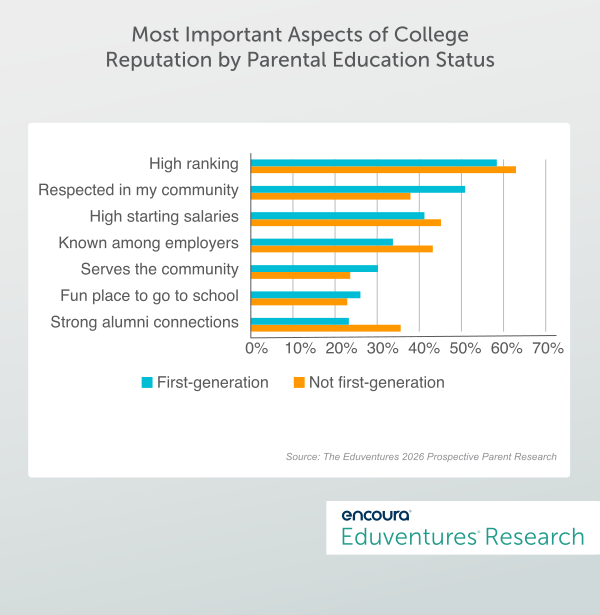
Figure 2.
While most parents draw on rankings to form their sense of a school’s reputation, rankings aren’t the whole picture. First-generation parents place less weight than college-educated parents on strong alumni networks, name recognition among employers, and, to a lesser extent, starting salaries — even though both groups tend to value career preparation equally (not pictured in Figure 2).
Where first-generation parents place more weight is on whether a school serves and is respected in its local community. They’re more likely to discuss proximity to home with their child and more likely to favor an in-state public institution — though they don’t differ from college-educated parents in how close they actually want their child to stay.
Community reputation may simply be the most accessible signal available to these families — a stand-in for word of mouth when employer perceptions and graduate outcomes in unfamiliar industries are harder to research.
The Bottom Line
First-generation parents want to be involved, but, like their children, they may need more outreach and support to do so. This provides opportunities but also challenges for institutions that want to focus their recruitment on this student segment. For these institutions, outreach considerations should include:
- Reach families where they already respond. Print and email are effective in reaching first-generation parents if they receive outreach directed at them. Websites are used by many parents as well regardless of educational status. Parent portals and information geared toward first-generation families should be core to any institutional website design.
- Build community visibility to strengthen reputation among these families. Summer camps for local and regional students, athletics and other campus events, community service partnerships, and connections with community-based organizations are all ways to make that presence felt. Brand equity with first-generation families is built through community engagement.
- Design a parent strategy that is proactive. Many parents need an invitation to opt into institutional communication, especially if they are inexperienced in college search. Capture parent contact information through RFI forms, at community events, and through athletic ticket sales, and ask inquiring students for it directly. Digital advertising also reaches parents effectively. Geofencing communities with low college attainment is one way to target this hard-to-reach group.

